It happens in a split second at the pump. You’re distracted, on autopilot, or using an unfamiliar hire car, and before you know it you’ve put the wrong fuel in your car — petrol in a diesel, or diesel in a petrol. If you’ve just realised, take a breath. Misfuelling is one of the most common mistakes on UK forecourts, and handled correctly it’s very rarely the disaster it feels like in the moment.
At Fast Track Recovery, we deal with misfuelling call-outs across Stoke-on-Trent and the surrounding area week in, week out. This guide walks you through exactly what to do, what not to do, and how a professional fuel drain gets you safely back on the road.
Petrol In A Diesel Vs Diesel In A Petrol
Not all misfuelling is equal, and knowing which mistake you’ve made helps you understand the risk.
Petrol in a diesel is by far the most common, largely because a petrol nozzle fits easily into a diesel filler neck. This is also the more damaging combination. Diesel acts as a lubricant for the fuel system, and petrol does the opposite — it reduces lubrication and can cause metal-on-metal wear in the high-pressure fuel pump and injectors if the engine is run.
Diesel in a petrol is less common because the larger diesel nozzle usually won’t fit a petrol car’s narrower filler neck. It’s also generally less harmful. Diesel won’t combust properly in a petrol engine, so the car will typically splutter, misfire and produce clouds of smoke rather than suffer serious internal damage.
- Petrol in diesel: higher risk of expensive damage, especially if driven
- Diesel in petrol: usually less damage, car often won’t run properly
- Either way: the safest response is identical

The Golden Rule: Don’t Turn The Key
If you remember nothing else from this article, remember this: do not start the engine. As long as the wrong fuel is sitting in the tank and hasn’t been drawn into the fuel system, the damage is almost always limited to the tank itself — which is straightforward to drain and flush.
The moment you turn the key, the fuel pump begins pulling the contaminated mixture through the pump, filters, lines and injectors. That’s when a simple drain can turn into a much larger, more expensive repair bill.
If you’ve realised while the car is still on the forecourt and hasn’t been started, you’re in the best possible position. If you’ve already driven off and the car is running rough, pull over safely as soon as you can, switch the engine off, and don’t restart it.
What To Do The Moment You Realise
Follow these steps and you’ll keep the situation under control:
- Don’t turn on the ignition — not even to move the car or listen to the radio.
- Put the car in neutral and apply the handbrake. If you’re at a pump, ask forecourt staff to help you push it to a safe spot clear of other customers.
- Tell the petrol station staff. They deal with this regularly and may have a designated area to move to.
- Call a professional fuel drain service. This is a job for the right equipment, not a DIY siphon.
- Wait somewhere safe — out of the carriageway and away from moving traffic.
Wrong Fuel In The Tank?
Don’t start the engine. Fast Track Recovery drains and recovers misfuelled vehicles 24/7 across Stoke-on-Trent and the surrounding area.
How The Fuel Gets Drained And Flushed
A professional fuel drain is a controlled, methodical process. When our team arrives, we assess whether the engine has been started, which tells us whether the contamination is limited to the tank or has reached the fuel system.
For a roadside drain, the contaminated fuel is safely pumped out of the tank into a sealed container using specialist equipment. The tank is then flushed to remove residue, and clean fuel of the correct type is added so the car can be started and tested.
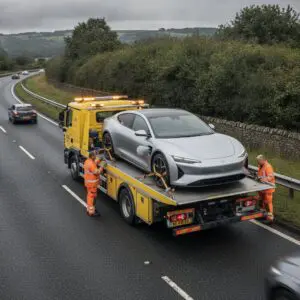
If the engine has already been run and the wrong fuel has circulated through the system, we may recommend recovering the vehicle on a flatbed to a garage where the fuel lines, filter and injectors can be checked and cleaned properly. Either way, you’re not left stranded — we handle the drain or the recovery, whichever is safest for your car.
How Much Does Misfuelling Recovery Cost?
The cost depends on the situation. A straightforward roadside fuel drain where the engine was never started is the most affordable outcome, which is exactly why acting quickly and leaving the key alone matters so much. If the car has been driven and the fuel system needs professional cleaning, costs rise — another reason not to turn the key.
Many comprehensive insurance policies and breakdown packages include some cover for misfuelling, so it’s always worth checking your paperwork. We’ll give you a clear, upfront price before any work begins, with no surprises.
Misfuelling feels like a catastrophe in the moment, but it’s a routine, fixable problem — as long as that engine stays switched off.
If you’ve put the wrong fuel in your car anywhere around Stoke-on-Trent, the fastest way back on the road is a single phone call. Our team can talk you through the immediate steps, get to you quickly, and carry out a safe drain or recovery. Take a look at our breakdown recovery service to see how we help drivers across the area every day.