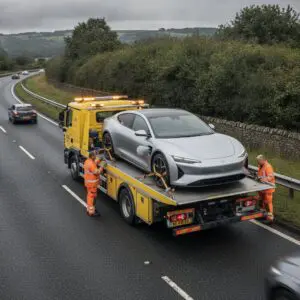
Large parts of England’s smart motorway network no longer have a permanent hard shoulder — and if you stop in a live lane, the safe move is not the one most drivers instinctively reach for. Around Stoke-on-Trent, stretches of the M6 run as “all lane running” smart motorway, where the old hard shoulder is now a live traffic lane. Knowing exactly what to do before it happens is the difference between a tense few minutes and a genuine emergency.
Short answer: If you break down on a smart motorway with no hard shoulder, keep left and aim for an emergency area or the next exit. If you can’t reach one, stop as close to the left verge as possible, switch on your hazard lights, leave the car by the left-hand doors, stand behind the safety barrier, and call National Highways using the orange SOS phone or 999.
By the Fast Track Recovery team · Published 6 August 2026 · Updated 6 August 2026
What “No Hard Shoulder” Actually Means
Not every smart motorway is the same, and the differences matter when something goes wrong. There are three types on the UK network:
- Controlled motorways keep a permanent hard shoulder and use variable speed limits on overhead gantries.
- Dynamic hard shoulder schemes open the hard shoulder as a running lane only at busy times — a red X above it means it is closed.
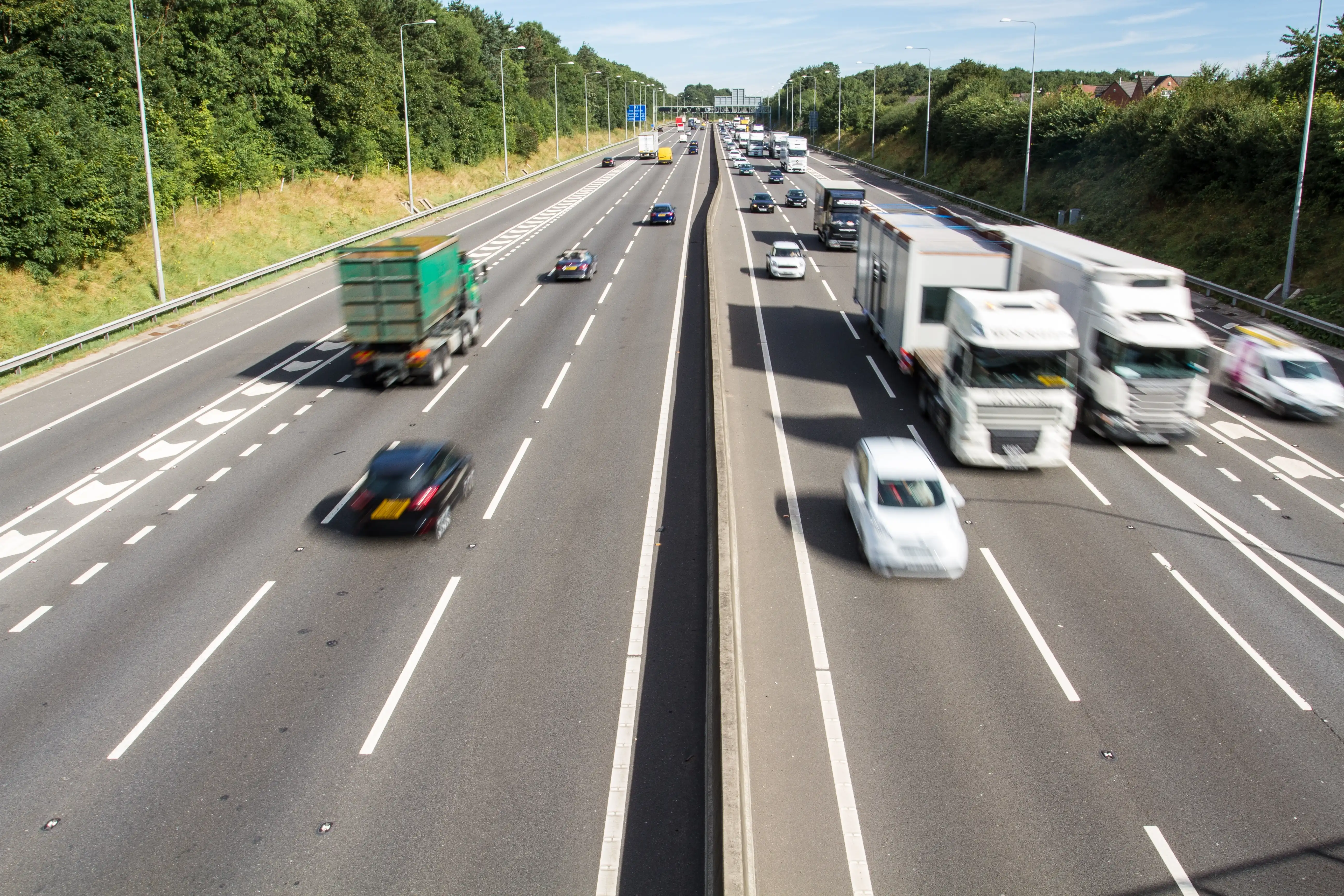
- All lane running (ALR) schemes have no hard shoulder at all. What used to be the emergency lane is now a permanent live lane, and the only safe places to stop are spaced-out emergency areas.
The stretch of the M6 near Stoke-on-Trent includes all lane running sections, so drivers here need to treat the left-hand lane as live traffic, not a safe refuge. A red X on a gantry above any lane means that lane is closed — you must move out of it, because it may be shut for a broken-down vehicle, debris or an incident ahead.
Where You Can Stop: Emergency Areas Explained
On motorways without a permanent hard shoulder, emergency areas give you a place to pull in. They are marked by blue signs showing an orange SOS telephone symbol, the tarmac is painted orange, and each one is roughly the length of a football pitch. Every emergency area has a free SOS phone that connects you straight to a National Highways control room, so operators can see exactly where you are and close lanes to protect you.
Crucially, there are now far more of them than there used to be. National Highways completed a £390m retrofit programme that has delivered around 50% more emergency areas across the all-lane-running network compared with January 2022, adding over 150 extra stopping places (National Highways). That means the gap to the next safe stop is shorter than it once was — but you still have to plan for it.
If you make it into an emergency area:
- Stop as far forward in the bay as you safely can.
- Get everyone out through the left-hand doors and stand behind the safety barrier.
- Use the orange SOS phone first — it pinpoints your location automatically.
- Do not attempt any repairs yourself, and do not rejoin the motorway without speaking to National Highways.
If You Can’t Reach An Emergency Area
Sometimes the car simply won’t make it — a blowout, a total loss of power, or you are already in a middle lane. If that happens, the priority order is people first, car second.
- Move as far to the left as you can, even onto the verge, and put your hazard lights on immediately.
- If you are next to the left verge and it is safe, leave through the left-hand doors, get behind the barrier, and call 999.
- If you are stuck in a live lane and cannot get out safely, keep your seatbelt on, leave your hazard lights flashing, and call 999. National Highways can set an overhead red X to close your lane and warn approaching traffic.
This is the part that feels counter-intuitive: on a normal motorway you would get out and stand well away from the car, but in a live smart-motorway lane, staying belted in with hazards on can be safer than stepping into moving traffic. Let the control room close the lane first.
Broken Down On The M6 Right Now?
Fast Track Recovery is on call 24/7 across Stoke-on-Trent and the surrounding motorway network. Get to a safe place, then call us.
How Recovery Works On A Smart Motorway
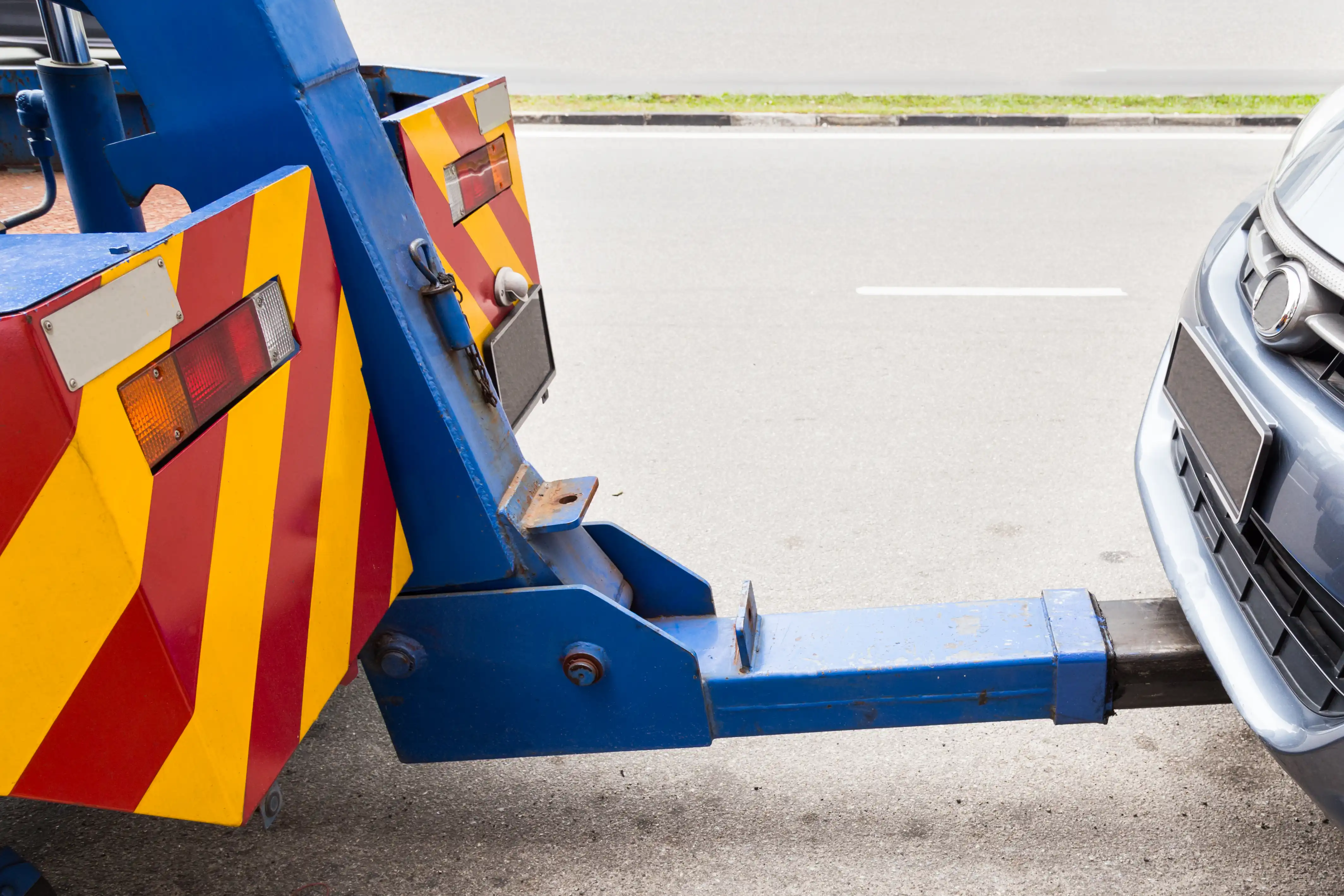
Recovery from a live smart-motorway lane is a coordinated job. National Highways or their traffic officers usually close the affected lane with a red X and, where needed, hold traffic so a recovery vehicle can reach you and load safely. That is why speaking to the control room first matters so much — it sets the whole recovery up to happen behind a protective closure rather than in live traffic.
Our motorway recovery service is built around exactly this kind of call-out: fast response, the right loading equipment, and drivers who work with the control room rather than against the traffic. Once you are safely recovered, we can take the vehicle wherever it needs to go, whether that is a local garage or your home.
Smart Motorway Breakdown FAQs
What should you do if you break down on a smart motorway?
Try to leave at the next exit or reach an emergency area. If you can’t, stop as far left as possible, put your hazards on, exit by the left-hand doors where safe, stand behind the barrier, and call National Highways or 999.
What is an emergency refuge area?
It is a marked orange bay set back from the live lanes, signed with a blue-and-orange SOS symbol, roughly the length of a football pitch, with a free phone linked directly to a National Highways control room.
Can you stop on a smart motorway if there’s no hard shoulder?
Only in an emergency, and ideally in an emergency area. If you must stop elsewhere, get as far left as possible, use hazard lights, and call for help — never treat a live left-hand lane as a safe place to wait.
What does a red X mean on a smart motorway?
A red X above a lane means that lane is closed. You must move out of it as soon as it is safe, because it may be closed for a broken-down vehicle, a collision or debris ahead.
The safest breakdown is the one you have already planned for. Save a 24/7 recovery number in your phone now, so you are never scrolling for help while parked in a live lane.
Related reading: for a full walkthrough of a motorway breakdown near Stoke, see what to do if you break down on the M6, and if you don’t have cover, read your options when your car stops with no breakdown cover.
About the author: The Fast Track Recovery team runs a 24/7 breakdown and accident recovery operation across Stoke-on-Trent and the surrounding motorway network, including the M6, A50 and A500.