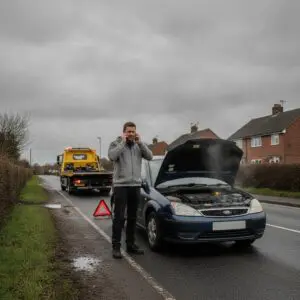
Stuck in mud on a farm track outside Stoke-on-Trent, wedged in a ditch after sliding off a wet country lane, or bogged down in snow on a rural road in winter? Not every difficult vehicle situation is a straightforward tow. Sometimes what you actually need is a winch, not just a truck to hook up and pull away. This guide explains the difference, when winching is the right call, and what happens when Fast Track Recovery brings a winch to you.
Winching Versus A Standard Tow: What’s The Difference?
A standard tow assumes your vehicle is on solid, reasonably level ground and can be pulled or loaded in the normal way. Winching is different. It’s used when a vehicle can’t move under its own power and can’t simply be hitched up and driven or loaded onto a flatbed, because it’s stuck in something: mud, snow, a ditch, soft verge, or anywhere the wheels have lost grip or the car has dropped below the level of the road.
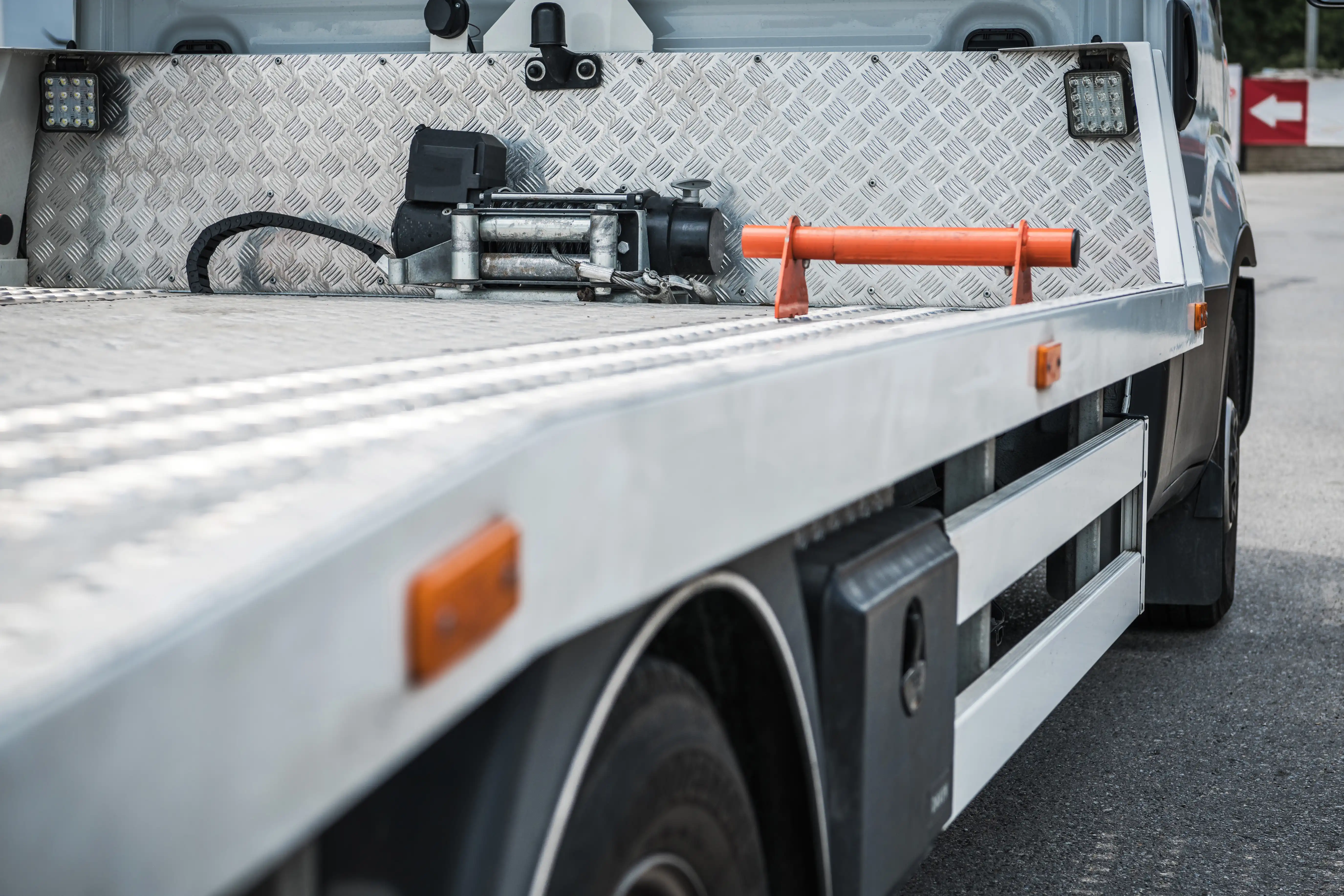
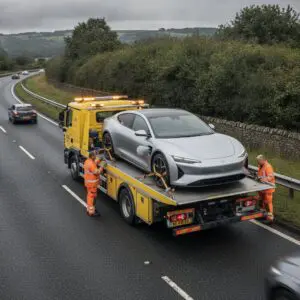
A winch uses a powerful cable, driven by a motor on the recovery truck, attached to a proper recovery point on your vehicle. Rather than jerking or dragging the car, the winch applies steady, controlled pulling force to bring it back onto solid ground or up onto the truck bed. It’s a slower, more deliberate process than a standard tow, but it’s the only safe way to move a vehicle that’s genuinely stuck rather than simply broken down.
Why You Shouldn’t Try To Get Yourself Unstuck First
It’s tempting to try rocking the car, gunning the accelerator, or getting a few people to push when you’re stuck in mud or snow. Sometimes that works. Often it makes things worse. Spinning wheels dig deeper into soft ground, and pushing a heavy vehicle on a slope or in a ditch carries its own risks if it suddenly moves.
- Spinning the wheels in mud or snow typically digs the car in deeper rather than freeing it.
- Attempting to tow a stuck vehicle with another car and a rope can damage both vehicles, and doesn’t provide the controlled pulling force winching does.
- If the car has gone into a ditch at an angle, moving it incorrectly can cause it to roll or shift further.
- Getting underneath a stuck vehicle to dig it out yourself is risky if the ground gives way or the car moves.
If your car is stuck but not damaged and nobody is at risk, it’s usually best to stay clear of the vehicle and call us rather than attempting to free it yourself. A winch recovery is often quicker and safer than a DIY attempt that doesn’t work.
Common Situations That Need A Winch
Stuck In Mud Or A Soft Field Entrance
Rural roads and farm access points around Stoke-on-Trent and the wider Staffordshire countryside can turn soft very quickly after rain. A car that’s pulled slightly onto a verge or field entrance to let another vehicle pass can end up bogged down surprisingly easily.
In A Ditch After Sliding Off The Road
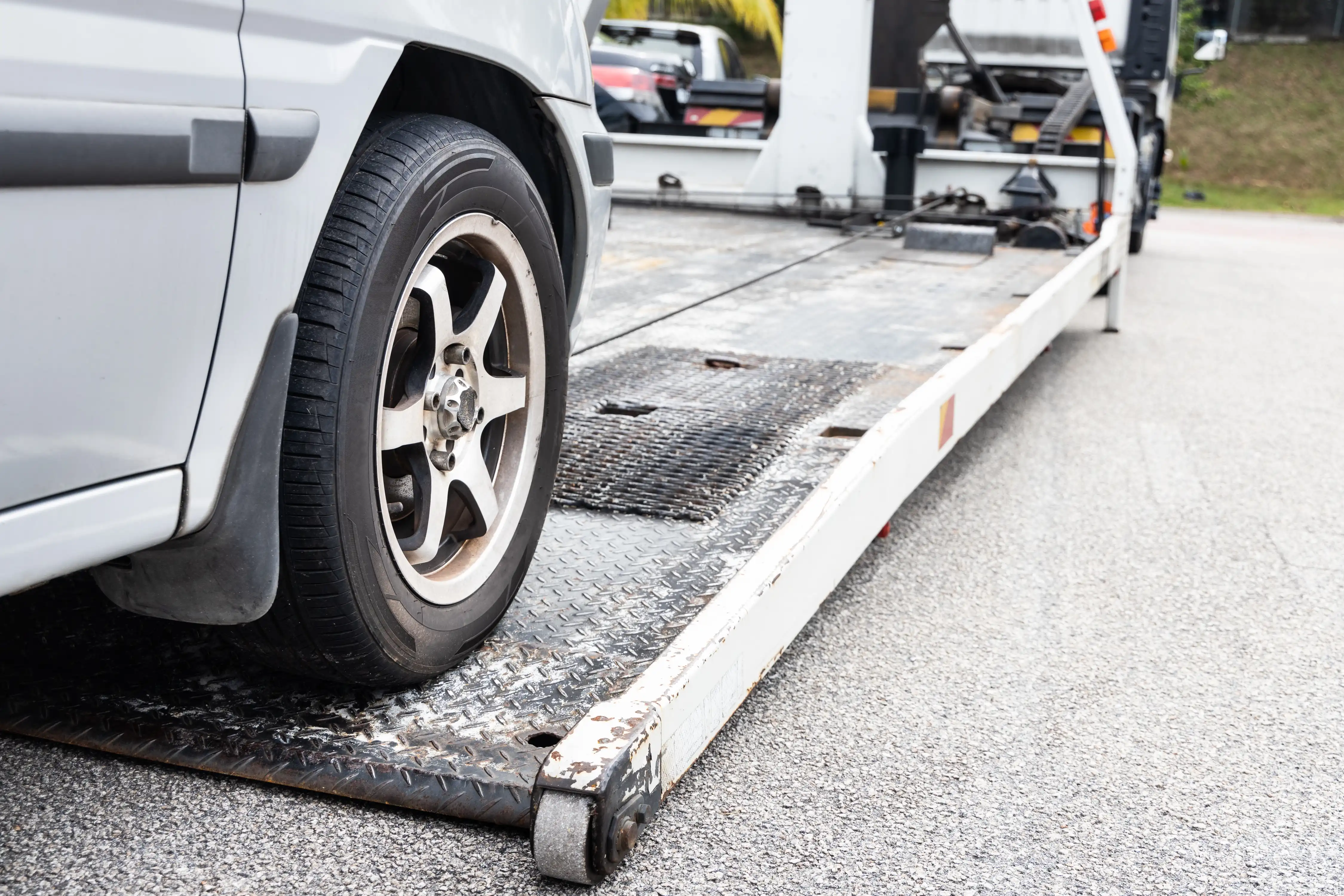
Wet or icy conditions on country lanes sometimes end with a car sliding gently off the carriageway into a ditch or verge, without a serious collision. The car might be undamaged, but it’s sitting somewhere a normal tow truck can’t simply hook up and pull from.
Snow-Bound In Winter
A heavy snowfall can leave a car stuck on a driveway, side road or hill start, particularly anywhere with a slight incline. Front-wheel-drive cars especially can struggle to get moving again once wheels start spinning on packed snow or ice.
Off A Track Or Unofficial Parking Spot
Parking on grass verges at events, farms, rural venues or informal parking areas is common, and it usually works fine until the ground softens. If a car sinks in after rain, it needs winching out rather than a standard collection.
Stuck And Need A Winch?
Fast Track Recovery brings proper winching equipment to vehicles stuck in mud, snow, ditches or soft ground across Stoke-on-Trent, 24/7.
What Happens When We Arrive With A Winch
When you call us about a stuck vehicle, we’ll ask where you are, what the vehicle is stuck in, and roughly how it’s positioned, so we bring the right equipment and truck for the job. Once on site, our driver assesses the situation before doing anything: checking the ground, the angle of the vehicle, and the safest recovery point to attach the winch cable to.
- We identify a proper towing or recovery eye on the vehicle rather than attaching to anything that isn’t designed to take the load.
- The winch cable is attached and the pull is controlled and gradual, not a sudden yank.
- We reposition as needed if the first angle of pull doesn’t free the vehicle safely.
- Once the vehicle is back on solid ground, we assess whether it’s driveable or needs to be loaded onto the truck and taken elsewhere.
What You Should Do While You Wait
Stay well clear of the vehicle once you’ve called us, particularly if it’s at an angle or on a slope. Don’t attempt to attach ropes, straps or chains yourself, and don’t let anyone crouch near the wheels or underneath the car. If the location is hard to describe, a pin drop or what3words location is genuinely useful for getting to you quickly, especially down farm tracks and unnamed rural lanes.
Does Winching Cost More Than A Standard Recovery?
Winching typically takes longer and needs more specialist handling than loading a car that’s simply broken down on a driveway, so it’s usually priced as part of a slightly more involved job rather than a flat add-on. We’ll always be upfront about this when you call, based on where the vehicle is and how it’s stuck, so you know what to expect before we arrive rather than being surprised afterwards.
Winching For More Than Just Cars
Vans, 4x4s and even motorcycles can end up stuck rather than simply broken down, particularly anywhere off firm tarmac. The same principle applies regardless of vehicle type: if it can’t be driven or towed conventionally because it’s stuck rather than faulty, winching is the safe way to recover it, and we bring the right equipment whatever you’re driving.
Preventing A Stuck-Vehicle Situation In The First Place
You can’t always avoid soft ground or a slippery bend, but a few habits reduce how often you end up needing a winch:
- Avoid pulling fully onto grass verges or field entrances after heavy rain, even briefly, since ground that looks firm can be deceptively soft underneath.
- Take corners on unfamiliar country lanes a little slower in wet or icy conditions, particularly on roads without street lighting.
- If you’re driving in snow, try to stick to routes that have been gritted or cleared rather than untreated side roads, especially on hills.
- Keep a small shovel and some old matting or grit in the boot through winter; sometimes a bit of extra traction is all that’s needed, though it’s not a substitute for proper recovery if the car is genuinely stuck.
None of this guarantees you’ll never get stuck, but it reduces the odds, and knowing who to call if it does happen means the situation is sorted quickly rather than turning into a longer ordeal.
Common Questions About Winch Recovery
Will winching damage my car?
Not when it’s done properly. We attach to a genuine recovery point rather than a bumper, trim or anything not designed to take load, and apply a controlled, steady pull rather than a sudden jerk.
What if my car won’t start after being stuck?
That’s common, particularly after sitting in mud or snow for a while with the engine off. Once we’ve recovered the vehicle onto solid ground, we can assess whether it’s driveable or needs transporting to a garage.
Can you winch a car out of a ditch on a busy road?
Yes, though on a faster or busier road we’ll take extra care positioning the recovery truck safely, and may need to manage traffic briefly while the winch is in use.
Do I need to be present when you winch my car out?
It’s helpful if you can be there to confirm details and unlock the vehicle, but the main thing is staying at a safe distance from the vehicle itself while the winching is actually happening.
Is winching covered by breakdown cover?
Some breakdown policies include winch-out as standard, others treat it as an add-on or exclude it for off-road situations, so it’s worth checking your policy documents. If it’s not covered, or you don’t have cover, calling us directly means a clear price agreed before we start rather than a dispute afterwards.
Being stuck feels like a smaller problem than a full breakdown, but it needs the right equipment to fix properly. A winch does the job safely; brute force usually just makes it worse.
If you’re stuck in mud, snow, a ditch or anywhere else around Stoke-on-Trent that a standard tow won’t solve, Fast Track Recovery can bring a winch to you around the clock.