The A500 — the road every local calls the “D-Road” — carries the vast majority of Stoke-on-Trent’s traffic, and back in 2004 it was already moving around 60,000 vehicles a day through the city. Add the A50 sweeping in at Sideway towards Uttoxeter and Derby, and you have two fast, relentless dual carriageways with very little room for error. Being broken down on the A500 or A50 feels very different from stalling on a quiet residential street in Fenton or Burslem — the pace of the traffic changes everything.
This guide walks through exactly what to do if you are broken down on the A500 or A50 — where to stop, how to keep yourself safe next to fast-moving traffic, and who to call to get you and your vehicle recovered.
Why The A500 And A50 Are Not Like Other Roads
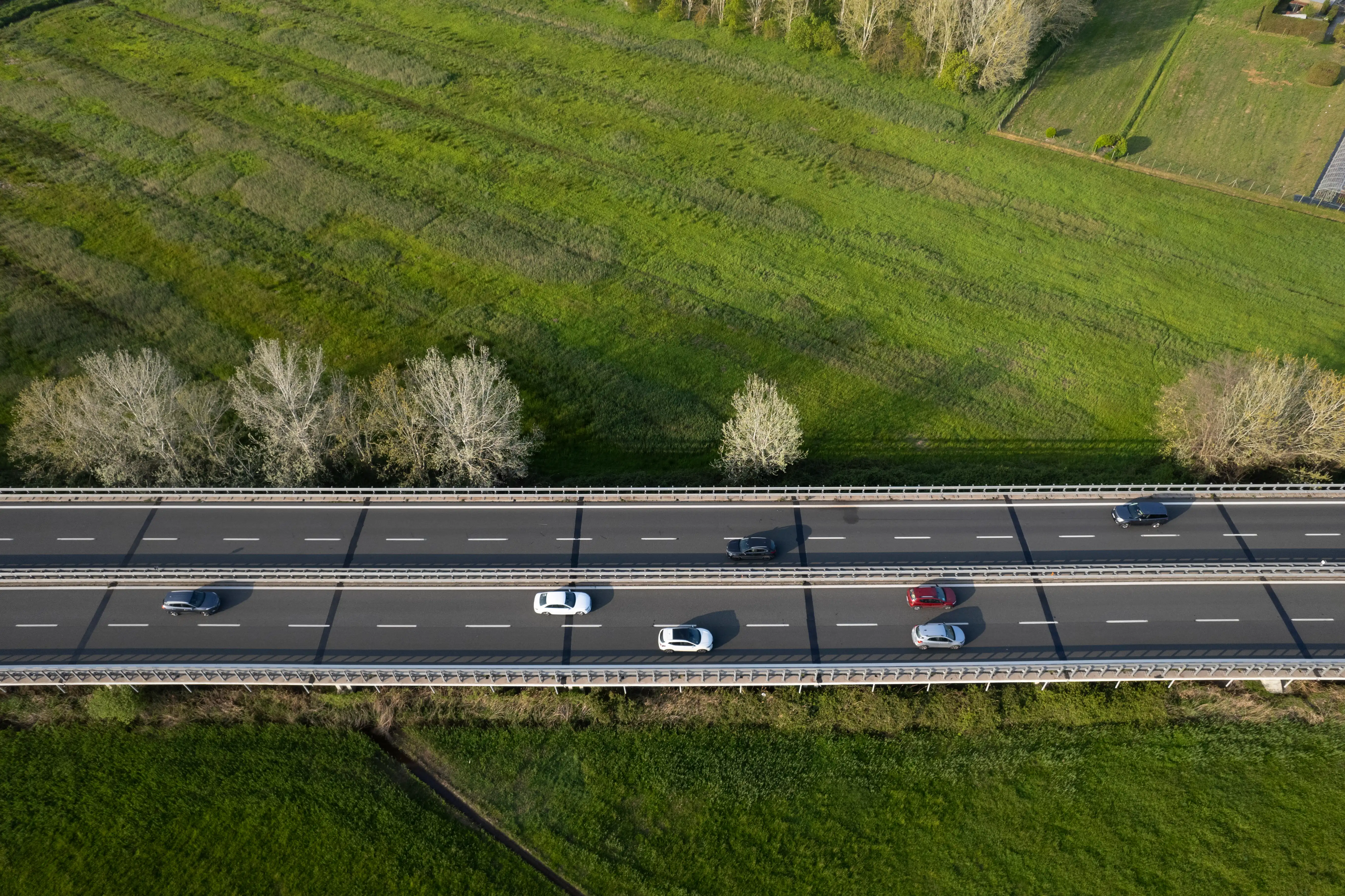
The A500 is a 19-mile dual carriageway that links junctions 15 and 16 of the M6 with the heart of Stoke-on-Trent. Its “D” shape between those two junctions is where the nickname comes from. The A50 joins it at Sideway on a grade-separated roundabout, funnelling traffic from the east.
What makes them dangerous when you stop is simple: speed and space. Traffic runs at 60–70mph, and through the urban middle section the road sits in cuttings with no continuous hard shoulder to duck into. That combination is why breaking down here needs a calmer, more deliberate response than a low-speed street. It is also why our motorway and A-road recovery service exists as a dedicated service — these roads simply demand a faster, safety-first callout.
The Breakdowns We See Most On These Roads
The D-Road’s stop-start nature during rush hour, combined with long fast runs between junctions, produces a fairly predictable set of failures. Knowing them helps you spot trouble early enough to get left before you are stranded:
- Flat or failing batteries — the single most common breakdown cause on UK roads, and stop-start crawling through Hanley and Stoke is exactly the kind of driving that exposes a weak battery.
- Overheating in congestion — sitting in slow A500 traffic on a warm day pushes cooling systems hardest. A rising temperature gauge is your cue to come off at the next junction, not to press on.
- Tyre blowouts and punctures — debris collects on fast dual carriageways, and a blowout at 60mph needs a calm, straight-line response: ease off, hold the wheel, and coast left.
- Running out of fuel — easily done when a quick hop across the city turns into a 40-minute crawl. It counts as a breakdown, and you still need to get safely off the carriageway.
What To Do The Moment You Break Down
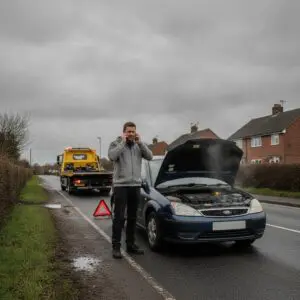
The official advice from the Highway Code (rules 275–278) is built around one idea: reach a “place of relative safety” and keep away from moving traffic. Here is how that translates on the D-Road:
- Go left. If you feel the car failing, indicate and move left early. Aim for the next slip road, lay-by or a wide grass verge rather than stopping dead in a lane.
- Hazards on. Switch on your hazard warning lights immediately so traffic behind gets as much warning as possible.
- Wheels and position. Stop as far to the left as you can, wheels turned left, leaving yourself room to get out on the nearside.
- Exit away from traffic. Everyone leaves through the left-hand doors and moves up the banking or behind a barrier — never stand between your car and oncoming traffic.
- Warning triangle. Because these are dual carriageways, you can place a warning triangle at least 45 metres (147 feet) behind the car on the same side. Only ever do this if it is safe to walk back to it.
Broken Down Right Now?
Fast Track Recovery is on call 24/7 across Stoke-on-Trent, the A500, the A50 and the surrounding area.
Where You Can (And Can’t) Safely Stop
Local knowledge helps here. The A500 does have places you can limp to, but they are spread out:
- Slip roads and junctions at Hanford, Sideway (the A50 interchange), Stoke, Wolstanton and Talke give you a chance to peel off the main carriageway entirely — always the best option.
- Wide verges exist on the more open stretches near the M6 junctions, but they narrow sharply through the city cuttings.
- Retail-park and services access near Wolstanton can be a lifeline if you can coast that far.
What you should not do is treat any old strip of tarmac as a safe stop. If there is genuinely nowhere to go, that is exactly the scenario the 999 advice above is written for.
Who To Call — And In What Order
Priorities matter when you are next to fast traffic. Work through them in this order:
- 999 — first, and without hesitation, if you are in a live lane, if anyone is hurt, or if you feel unsafe.
- National Highways on 0300 123 5000 — available 24/7 for the trunk section between M6 junctions 15 and 16; they can warn traffic and coordinate lane closures.
- A recovery firm — once you are safe, this is who actually moves the vehicle. A local operator who knows the A500 and A50 will reach you faster than a national call centre routing a job from miles away.
That last point is the one drivers underestimate. Whether it is a flat battery, a blowout or something more serious, our breakdown recovery team is dispatched from within Stoke-on-Trent, so we are not fighting cross-country traffic to reach you. If your breakdown is on the motorway proper rather than the A-roads, our guide on what to do if you break down on the M6 covers the extra rules that apply there.
Our honest view: most people freeze for the first thirty seconds of a breakdown, and on a 70mph road those seconds count. Rehearse the phrase “left, hazards, out, call” now, while it is calm, and you will act instead of freeze when it matters.
How Quickly Can Recovery Reach You?
When you are stood on the edge of a 70mph carriageway, minutes feel like hours — so response time genuinely matters. The single biggest factor is where the recovery vehicle is dispatched from. A national breakdown line may accept your call quickly but then farm the job out to whichever contractor is free, who could be coming from Crewe, Stafford or further.
A Stoke-based operator, by contrast, is already near the D-Road and knows the quickest way onto it at Hanford, Sideway or Wolstanton. That local knowledge shaves real time off arrival, and on these roads that time is safety, not just convenience. When you call, give a precise location — the nearest junction, a driver location marker, or a what3words reference — so the driver comes straight to you rather than hunting along miles of dual carriageway.
Frequently Asked Questions
Does the A500 have a hard shoulder?
Not a continuous one. Through the urban Stoke-on-Trent section the A500 runs in cuttings and between junctions with no reliable hard shoulder, so if you break down you need to reach a lay-by, a wide verge or the next slip road rather than assume there is a safe strip to your left.
Should you put out a warning triangle on the A500?
Yes. The A500 and A50 are dual carriageways, not motorways, so the Highway Code’s rule to place a warning triangle at least 45 metres (147 feet) behind your vehicle applies. Never do this on a motorway, where triangles are banned, but on these A-roads a triangle helps traffic see you sooner.
What number do you call if you break down on the A500?
Call 999 straight away if you are stuck in a live lane or feel in danger. For the trunk section between M6 junctions 15 and 16 you can also reach National Highways on 0300 123 5000, 24 hours a day. Once you are safe, call a recovery firm such as Fast Track Recovery to move the vehicle.
Who is responsible for the A500?
National Highways maintains the trunk-road section of the A500 between M6 junctions 15 and 16, while other stretches beyond junction 16 are maintained by the local council. Either way, in a breakdown your priority is getting to a place of relative safety and calling for help, not working out who owns the tarmac.
Break down on the D-Road and the goal is simple: get left, get out on the safe side, and let the people who do this every day come to you.