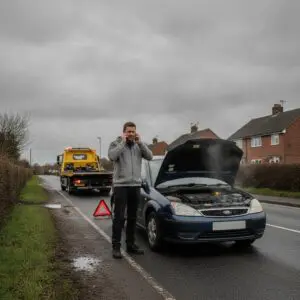
Breaking down on a motorway is one of the most frightening things that can happen to a driver. One minute you’re cruising along the M6 past Stoke-on-Trent, the next your car is losing power, a warning light is flashing, and you’ve got seconds to decide what to do before you’re a stationary object in a 70mph traffic stream. If it’s ever happened to you, you’ll know the adrenaline spike. If it hasn’t, it’s worth knowing exactly what to do before it does.
This guide walks through the safest way to handle a motorway breakdown around Stoke-on-Trent, including the M6, the A50 and the A500, and what to expect when you call Fast Track Recovery to get you off the road and on your way again.
Why Motorway Breakdowns Are More Dangerous Than They Feel
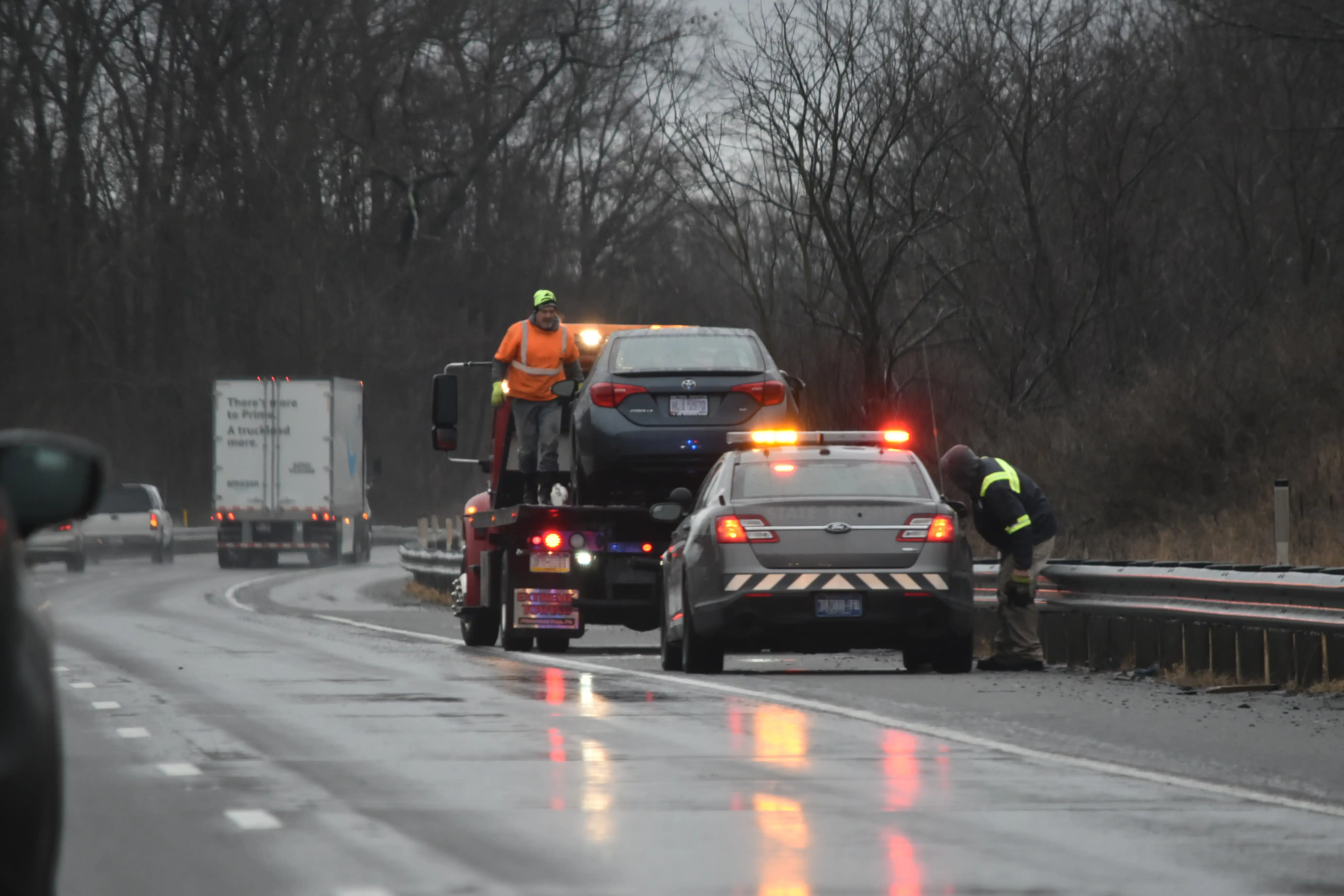
A car stopped on the hard shoulder looks harmless from inside. From the driver’s seat behind glass and steel, it’s easy to underestimate how exposed you actually are. Traffic on the M6 doesn’t slow down for a broken-down car, and a hard shoulder is only a few feet from live lanes doing motorway speed. Vehicles are struck on hard shoulders and verges every year, often because the driver or passengers stayed inside, or stood beside the car rather than well clear of it.
The other complication around Stoke-on-Trent is that stretches of the M6 use smart motorway technology, which means the hard shoulder isn’t always there, or isn’t always usable. That changes the entire process if you break down, which is exactly why it’s worth knowing the difference before you’re relying on memory under pressure.
Immediate Steps If You Break Down On The M6, A50 Or A500
If your car starts losing power, making a bad noise, or a warning light demands you stop, the priority is getting off the live carriageway safely, not necessarily quickly.
- Signal early and move left across the lanes towards the hard shoulder or verge, using your remaining momentum rather than braking hard mid-lane.
- Pull as far onto the hard shoulder as possible, ideally with your wheels turned slightly away from the carriageway.
- Put your hazard lights on immediately, and your sidelights too if visibility is poor or it’s dark.
- If you can do so safely, exit the vehicle from the passenger side doors, away from live traffic.
- Get behind the safety barrier if there is one, well away from both your car and the carriageway. Do not stand behind your vehicle.
- Put on a hi-vis vest if you have one before you get out, but don’t waste time searching for one if it means staying in a dangerous position longer.
Never attempt to fix the fault yourself on the hard shoulder, and never stand between your car and the barrier. If you have children or pets in the car, get them out and behind the barrier with you rather than leaving them inside.
Smart Motorway Sections: What Changes If There’s No Hard Shoulder
Parts of the M6 running through Staffordshire operate as smart or managed motorways, where the hard shoulder is either removed permanently or only used as a live lane during busy periods. If you break down in a section like this, the advice changes:
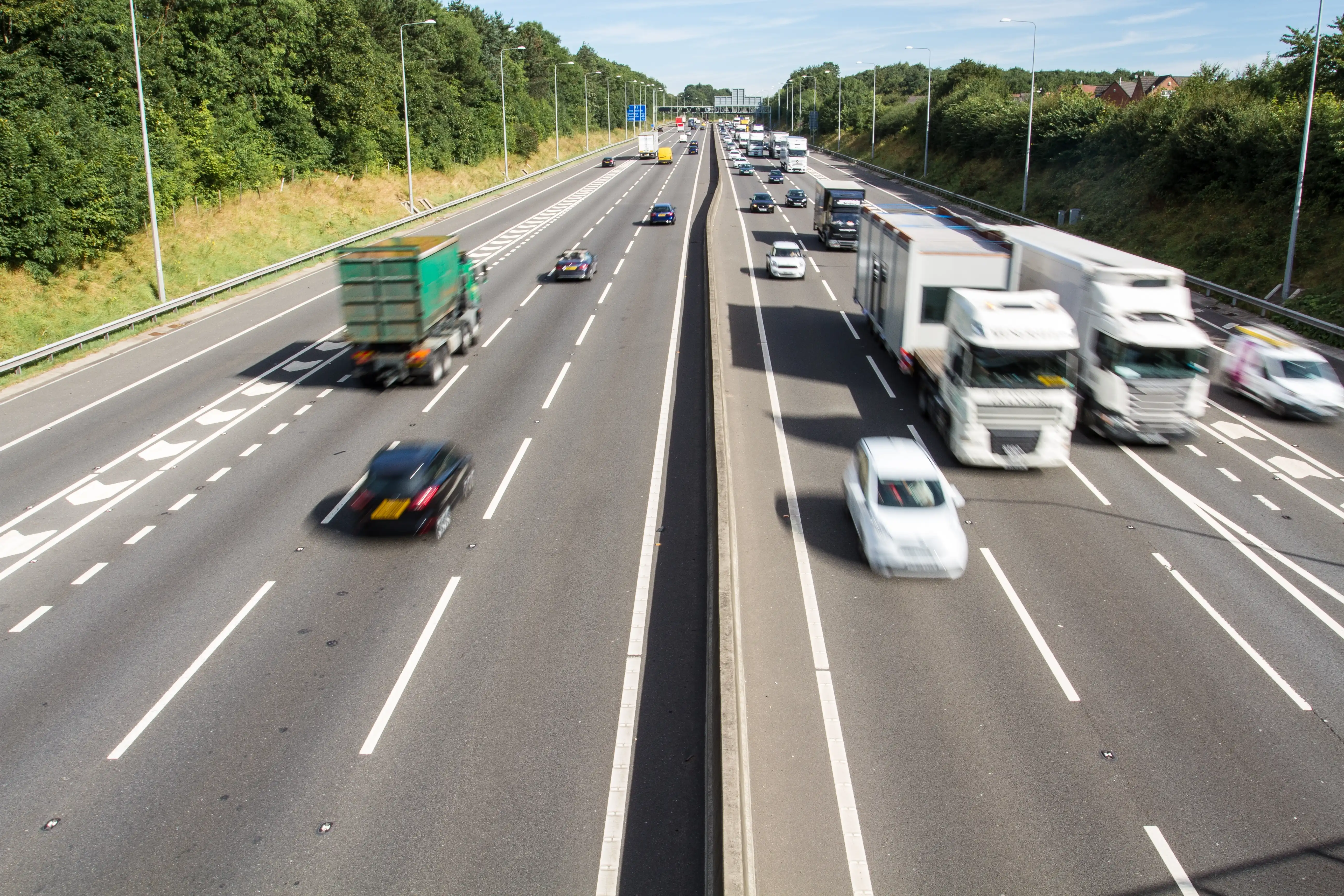
- If you can reach an Emergency Refuge Area (a marked lay-by set back from the carriageway), aim for that rather than stopping in a live lane.
- If you cannot move at all and you’re stuck in a live lane, keep your seatbelt on, put your hazard lights on, and call 999 immediately. This is treated as an emergency, not a routine breakdown.
- Only get out of the vehicle and cross to a barrier if you judge it’s safer than staying inside, for example if you’re at real risk of being hit.
- Look out for a red X displayed above the lane you’re in, which confirms it’s closed to traffic and National Highways are aware of your location.
Smart motorways use a network of cameras and sensors that are supposed to detect a stopped vehicle within minutes and close the lane, but you shouldn’t assume that’s happened until you see the red X or get confirmation. Treat every live-lane stop as urgent until you know otherwise.
Broken Down Right Now?
Fast Track Recovery is on call 24/7 across Stoke-on-Trent and the surrounding motorway network, including the M6, A50 and A500.
What Happens When Fast Track Recovery Arrives
Once you’re safely off the carriageway, or the lane is closed and it’s safe for a recovery vehicle to reach you, the process from there is straightforward. You call our number, tell us your location as precisely as you can (a junction number or the nearest marker post is ideal), and we dispatch a recovery vehicle straight to you.
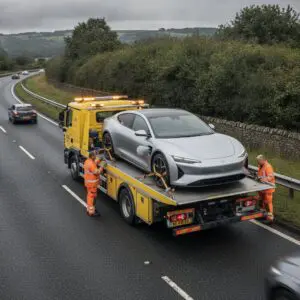
Our operators will usually be able to give you a realistic ETA over the phone, and we keep you updated if traffic or road closures affect the timing. When the recovery truck arrives, our driver assesses the vehicle, secures it onto the flatbed or with a tow, and takes you and the car to wherever makes sense: your home, your usual garage, or a nearby repairer if you don’t have one lined up. We cover breakdown recovery for cars, vans and motorcycles across Stoke-on-Trent, so whatever you’re driving, we can get it moved safely.
What To Expect From The Driver
Our recovery drivers deal with motorway breakdowns regularly, so they know how to position the truck safely, load your vehicle efficiently, and get you both off the hard shoulder or refuge area as quickly as possible. You don’t need to do anything technical, just stay safe behind the barrier until they arrive and let them know if your situation has changed since your call, for example if the lane reopens or your car becomes drivable again.
Staying Safe While You Wait For Recovery
Waiting for a recovery vehicle on the side of a motorway can feel like it takes forever, especially in bad weather. A few things make the wait safer and more comfortable:
- Stay behind the barrier, not on the hard shoulder itself, for the entire time you’re waiting.
- Keep your phone charged if possible, or conserve battery once you’ve made the initial call, in case we need to reach you with updates.
- In winter, keep warm clothing in the car. Waiting even 20 minutes in freezing temperatures without proper layers is unpleasant and can be genuinely risky.
- Don’t be tempted to walk along the hard shoulder to a nearby junction or services. It’s safer to stay put and let recovery come to you.
- If anyone in the car isn’t feeling well, or there’s a more urgent concern, call 999 rather than waiting it out.
Breaking Down On A Motorcycle Or In A Van
Everything above applies just as much if you’re riding a motorcycle or driving a van when things go wrong, though there are a couple of extra points worth knowing. On a bike, get off the machine and yourself well clear of the carriageway rather than trying to push it to safety through moving traffic. If it’s safe to move the bike a short distance onto the verge without crossing live lanes, do that, but don’t risk it if traffic is heavy. We recover motorcycles regularly and use the right straps and ramps to load them without scratching the tank or damaging the fairings.
Vans, especially loaded ones, behave differently to cars when something fails, and a heavier vehicle takes longer to move safely across lanes. If you’re driving for work and break down with a van full of tools, stock or equipment, let us know when you call so we bring a vehicle suited to the weight and size involved.
What To Keep In The Car In Case Of A Breakdown
A few basics kept in the boot make a breakdown considerably less stressful, particularly on a motorway where you might be waiting behind a barrier for a while:
- A hi-vis vest for each person likely to be travelling in the car
- A torch, especially useful for breaking down after dark or in poor weather
- A warm blanket or extra layer, particularly through autumn and winter
- A phone charger or power bank, so you’re not stuck with a dying phone mid-call
- Our number saved in your contacts, so you’re not searching for it under pressure
None of this prevents a breakdown happening, but it makes the wait for recovery considerably more bearable, especially if you’re stuck behind a barrier on the M6 in December.
Common Questions After A Motorway Breakdown
Can I just drive home if the car seems to run again?
If your car cuts out and then appears to restart normally, it’s tempting to just carry on. We’d always recommend getting it looked at rather than risking a repeat failure somewhere less safe, or further from help. A quick call to us means we can either recover you properly or advise on whether it’s safe to continue.
Will I get in trouble for breaking down on the hard shoulder?
No. A genuine breakdown isn’t an offence, and National Highways and the police expect vehicles to occasionally stop there. What matters is that you follow the safety steps above: hazards on, get behind the barrier, and call for help promptly.
What if I’ve just run out of fuel?
Running out of fuel on the motorway is treated the same way as any other breakdown in terms of safety procedure. Get off the carriageway if you can, follow the same steps, and call us. We’ll get you and the car moved, whether that’s to a fuel stop or home.
Do I need to inform anyone else, like my insurer?
Not usually for a straightforward breakdown, though it’s worth checking your own policy if the vehicle needs repair work afterwards. Recovery itself doesn’t typically need to be reported unless there was a collision involved.
How quickly can you actually reach me on the M6?
Response times depend on where exactly you are and how busy the road is at that moment, but as a local operator covering Stoke-on-Trent and the surrounding motorway network, we’re usually able to reach breakdowns on the M6, A50 and A500 faster than a recovery firm dispatched from further afield. We’ll always give you an honest ETA over the phone rather than a vague estimate.
Why Local Knowledge Matters On A Motorway Recovery
Knowing the road network around Stoke-on-Trent properly makes a genuine difference to how quickly we can reach a breakdown. We know which junctions get congested at certain times of day, where the nearest safe access points are along quieter stretches of the M6, and how to get a recovery truck to an Emergency Refuge Area without adding unnecessary minutes to the journey. That local knowledge is part of what keeps our response times down compared to a national call centre dispatching whoever happens to be free.
A breakdown on the M6 is stressful, but it’s over quickly once you’re safely behind the barrier and help is on the way. Stay calm, stay clear of the traffic, and let us handle the rest.
If you’re anywhere on the M6, A50 or A500 around Stoke-on-Trent and something’s gone wrong with your vehicle, Fast Track Recovery is available around the clock. Save our number in your phone before you need it, so you’re not searching for help while standing on a hard shoulder.
Related reading: if the breakdown happens on a local dual carriageway rather than the motorway, read what to do if you break down on the A500 or A50.
Related reading: much of the M6 near Stoke now runs as smart motorway — see what to do if you break down on a smart motorway with no hard shoulder.
Not on the motorway but stuck closer to home? If you break down in the town itself, read our local guide to vehicle recovery in Newcastle-under-Lyme for response times and costs.
If the reason you have stopped is a tyre rather than the engine, read our guide to what to do after a tyre blowout at speed — the first instinct most drivers have is the wrong one.